7 Signs Your Solar Panels Need Cleaning, and 4 That Point to Something Else
Short answer: the clearest of the signs your solar panels need cleaning is a clear-day output drop of more than about 3% compared with the same month last year, after allowing for normal aging. Visible droppings, pigeons under the array, mud streaks after a storm and a dirty band along the bottom edge are the others to watch for. A big sudden drop usually isn’t dirt at all.
Check your numbers first
Open your monitoring app, pick a clear, sunny day this month and one in the same month last year, and type in the daily kWh for each.
Pick two clear, sunny days with no clouds and no new shade. The checker takes off about half a percent for a year of normal panel aging.
The 7 signs
1. Clear-day output is down more than about 3%
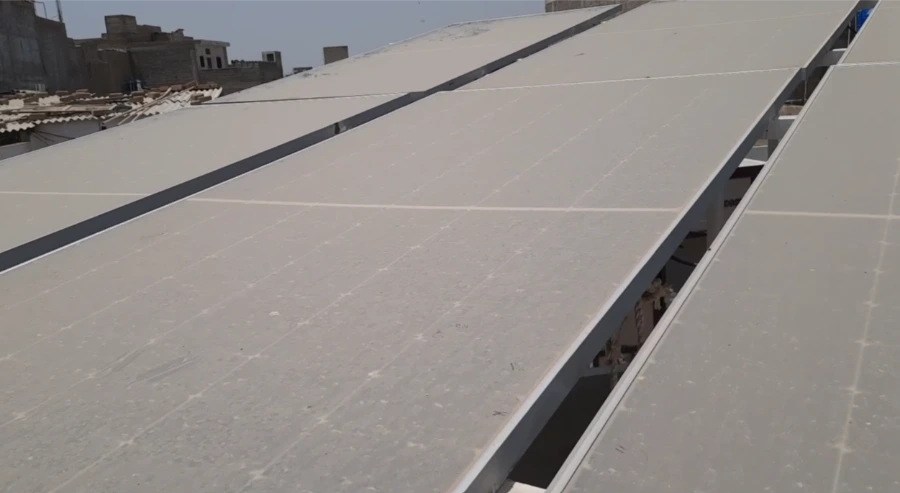
Panels lose about half a percent a year to normal aging, so compare like with like and take that off first. A small gap is often weather. A gap of 3% to 6% with no new shade is usually dirt. One Las Vegas owner on Reddit saw only about a 4% drop after three years without washing, which shows how slowly plain dust builds up here.
2. You can see white droppings on the glass
Droppings matter more than dust. Safety trainers at ISCA explain that a dropping shading one row of cells can cut that panel’s output by about a third, and a weak panel can drag down others wired with it. See bird droppings cleanup.
3. Pigeons coo at sunrise, or droppings land on your patio
If birds fly under the panels and disappear, there is almost always a nest. The panels will keep getting dirty until the gap is closed with pigeon proofing.
4. A dirty band along the bottom edge
On flat or low-slope panels, rain and dew pool at the lower frame and dry into a line of dirt. It shades the bottom row of cells first. See does rain clean solar panels for why.
5. One panel lags behind the rest in your app
Systems with microinverters or optimizers, such as Enphase or SolarEdge, can show each panel’s output. If one or two panels sit well below their neighbors on a sunny day, look at those panels for droppings or a shadow.
6. Mud streaks after a monsoon storm or dust storm
Light rain that falls through dusty air leaves streaks and spots. If they are still there a few days later, see cleaning after dust storms and monsoon.
7. White spots after sprinklers or a hose
Las Vegas tap water averages about 280 ppm hardness. Overspray from sprinklers or a past hose rinse leaves mineral spots that rain won’t remove. See hard water spots on solar panels.
4 signs it isn’t dirt
| What you notice | More likely cause | What to do |
|---|---|---|
| Output dropped sharply overnight | Inverter fault, tripped breaker or a dead string | Check the inverter and app for an error code, then call your installer or a solar electrician |
| Zero production on a sunny day | System off or an electrical fault | Don’t clean. Get the system checked |
| Lower output only in the afternoon | New shade from a tree, a neighbor’s addition or a patio cover | Trim or accept it. Cleaning won’t help |
| Browning, cracks, bubbles or burn marks | Panel damage or wear | Photograph it and book an inspection |
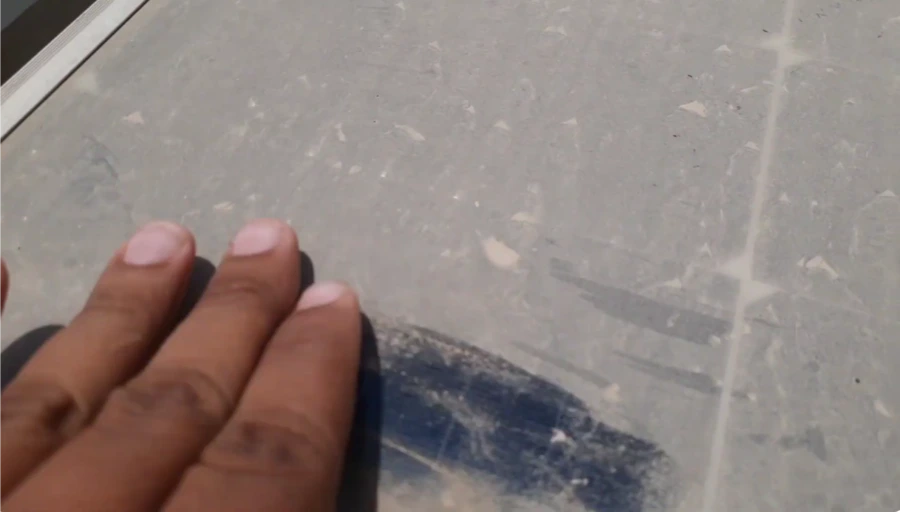
If your panels have a problem like this, a cleaning won’t fix it, and a fair company should tell you that before it takes your money. Our solar panel warranty guide explains who to call for damage.
Signs your solar panels need cleaning: more questions
Can you tell if solar panels are dirty from the ground?
Often, yes. Droppings show as white spots, mud as streaks, and a dirty band shows along the bottom edge. A thin dust film is hard to see from below, which is why the monitoring app is the better test.
Should I clean my panels if I can’t see any dirt?
Only if your numbers say so. If clear-day output matches the same month last year after aging, a cleaning won’t pay for itself yet, even if the panels look a little dusty.
Can dirty solar panels damage the system?
Plain dust won’t. Droppings can, because a shaded cell can heat up and form a hot spot. That is why droppings are worth removing even when the overall output drop looks small.
How often should I check for these signs?
A quick look at the app once a month, a walk around the yard after big storms, and an ear out for pigeons at dawn is enough for most Las Vegas homes.
Seeing one of these signs?
Tell us which one, plus your panel count and roof type. If it isn’t dirt, we will tell you that too.
Sources: REC cleaning guide, KTNV hard water, KTNV pigeons under solar panels, UNLV rainfall study. Updated October 2026.