Solar Panel Bird Droppings Cleaning Las Vegas: Nest and Droppings Cleanup
Short answer: bird droppings are the one kind of dirt that wind and our 4 inches of rain will not fix. A single dropping can shade a whole cell and create a hot spot. For solar panel bird droppings cleaning Las Vegas homes need, we wet down and remove droppings and nesting debris we can safely reach, bag it, wash the panels with deionized water, and then seal the gap with mesh so the birds cannot move back in.
Why bird droppings matter more than dust
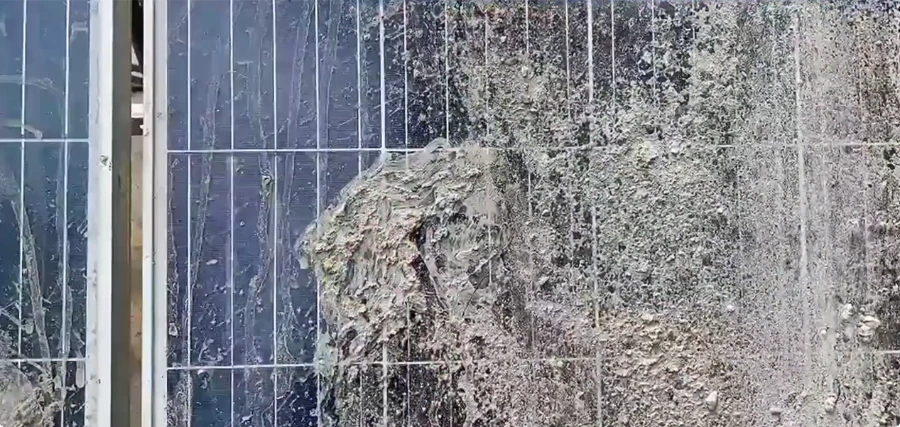
Dust spreads thin across the whole panel. A dropping sits in one spot and blocks the cell under it almost completely. Solar cells are wired in rows, so one shaded cell drags down the current for the cells around it. Panel makers add bypass diodes to limit the damage, but a covered cell still runs hot.
The International Energy Agency’s review of panel failures lists bird droppings as a cause of hot spots on thermal scans, and recommends checking the cell for cracks afterward. Hardened droppings often survive light rain, too, so in Las Vegas they can sit on the glass for months.
What we find under Las Vegas solar panels
When pigeons move in under an array, it is rarely just a few droppings on the glass. Under the panels we usually find sticks, feathers, nesting material piled around the conduit, and droppings packed into the gap between the panels and the roof. Pigeons come back to the same spot, so the pile grows every season.
Pigeons are fair game. Some other birds are not.
Rock pigeons are on the U.S. Fish and Wildlife Service list of birds the Migratory Bird Treaty Act does not cover, and so are house sparrows and European starlings. Many native birds are protected, though, including mourning doves and house finches, and their active nests should not be removed. If we find eggs or chicks of a protected bird, we stop, photograph it and come back after the nest is empty.
How we clean up droppings and nests safely
- Look first. We photograph the array, the nests and any wiring before we touch anything.
- Wet it down. We mist droppings and nesting material before moving them, so dust does not go into the air. NIOSH recommends spraying water to keep dust down when working around droppings.
- Wear the right gear. Gloves, eye protection, a NIOSH-approved respirator and disposable coveralls and shoe covers.
- No blowers, no dry sweeping. We lift debris out by hand and with soft tools, then bag it and take it off your property.
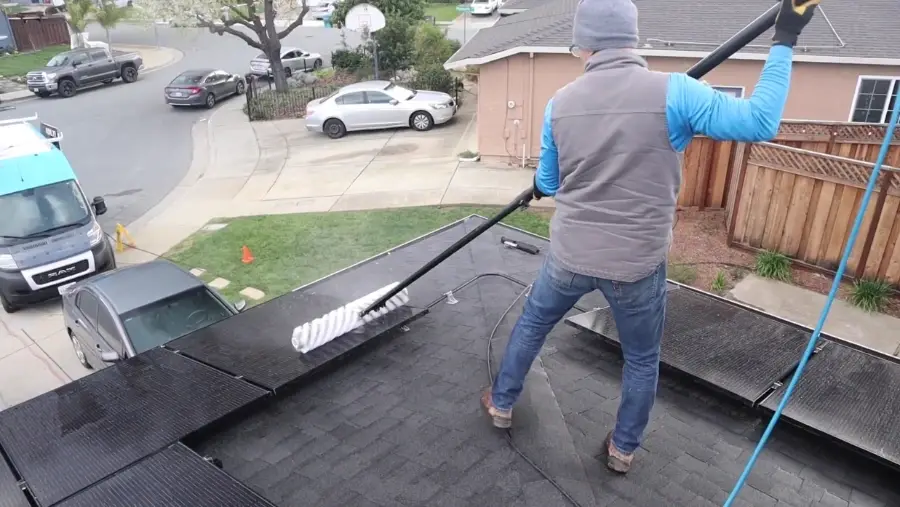
- Wash the panels. Deionized water and soft brushes, so the glass dries clear with no hard-water spots.
- Close the gap. We recommend PVC-coated steel mesh around the array so the birds cannot get back under. See pigeon proofing.
One honest limit: after years of nesting, some debris sits where nobody can reach it without lifting the panels. Removing panels is a job for a licensed solar contractor, and we will tell you before we start if that is what your roof needs.
Is it safe to clean bird droppings yourself?
A few droppings on reachable glass, wiped with water and a soft brush, is a small job. Piles under the array are different. NIOSH says the fungus behind histoplasmosis lives in soil with large amounts of bird or bat droppings, mainly in the central and eastern US, and the CDC says Cryptococcus is found in bird dung throughout the world. Both spread by breathing in spores.
So if you do it yourself, wet everything down first, never dry-sweep or use a leaf blower, wear gloves and a respirator, and stay off any roof you cannot walk safely. People with weakened immune systems should leave it to someone else. This is general safety information, not medical advice.
Prices for cleanup depend on how long the birds have been there. A prevention job with no nests costs much less than clearing years of buildup. See the Las Vegas solar cleaning price guide, and add a solar inspection if you are worried about chewed wiring. More pigeon and panel-damage answers are on our FAQ page.
Solar panel bird droppings cleaning Las Vegas FAQs
Do bird droppings damage solar panels?
They can. A dropping blocks the cell under it, which cuts output for that row of cells and can create a hot spot. The IEA recommends checking cells under droppings for cracks. Removing droppings promptly limits the damage.
Will rain wash bird droppings off my solar panels?
Often not in Las Vegas. Hardened droppings tend to survive light rain, and the valley only gets around 4 inches of rain a year.
Can you remove a pigeon nest with eggs in it?
Rock pigeons are not protected under the Migratory Bird Treaty Act, so their nests can be removed. Many native birds, like mourning doves and house finches, are protected, and we leave their active nests alone until they are empty.
Is it dangerous to clean pigeon droppings?
Piles of droppings can carry fungal spores that spread when the dust is breathed in. Wet droppings down first, never dry-sweep or use a blower, and wear gloves and a respirator. People with weakened immune systems should not do it themselves.
Do I need pigeon mesh after the cleanup?
If pigeons were nesting under the panels, yes. They return to the same spot, so without mesh the nests and droppings usually come back.
Get a droppings and nest cleanup quote
Send us your ZIP code, roughly how many panels, and a photo of the mess if you can get one safely from the ground. We will reply with a price for cleanup, mesh, or both.
Sources: DNV Zondits on bird droppings, IEA PVPS review of PV module failures, NIOSH: What Workers Should Know about Histoplasmosis, CDC on Cryptococcus, USFWS list of birds the MBTA does not cover, KTNV pigeons under solar panels. Updated October 2026.