Dust Storm Solar Panel Cleaning Las Vegas: After Haboobs and Monsoon
Short answer: the monsoon officially runs June 15 to September 30, and its short storms often bring gusty wind and dust with only a little rain. A light shower turns that dust into mud streaks, and UNLV found it took at least 0.2 inches of rain to even partly bring dusty panels back. For dust storm solar panel cleaning Las Vegas homes need, the best plan is to wait until the stormy stretch breaks, check your monitoring app, and then wash with deionized water at dawn.
What dust storms and monsoon storms do to solar panels
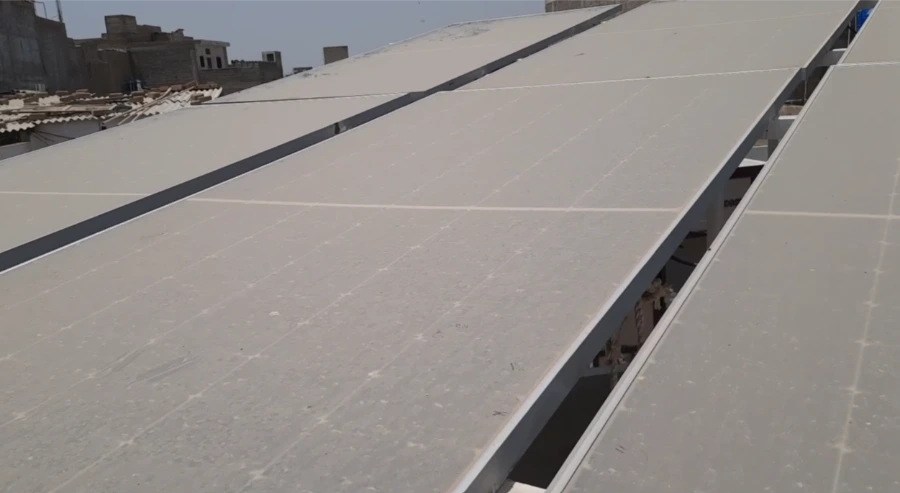
The National Weather Service defines the Southwest monsoon as June 15 through September 30, and says dust storms, or haboobs, are more common early in the season. In Las Vegas the heart of the monsoon runs from about mid-July to mid-September, with pop-up storms that bring strong gusts, lightning, flash flooding and occasionally hail.
Outside monsoon season, Clark County’s Department of Environment and Sustainability issues dust advisories whenever high winds are forecast, and spring storms can push gusts past 60 mph. Either way, the dust ends up on your glass.
Rain does not fix it. A few drops mix with the dust and dry into a muddy film, and the valley only gets around 4 inches of rain a year.
Should you clean right after a storm?
| After the storm | Clean now? | Why |
|---|---|---|
| Dust only, no rain | Wait for the windy stretch to end | Cleaning mid-pattern just means cleaning twice |
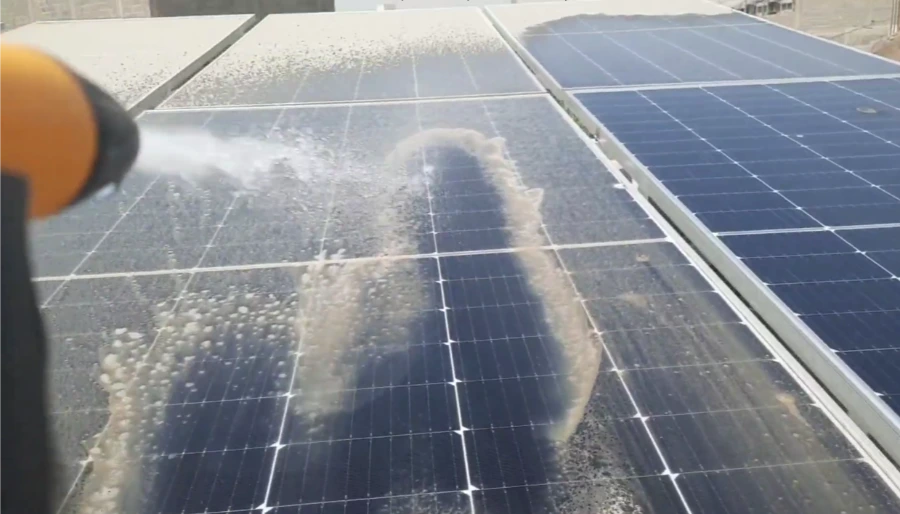
| Light rain on dusty panels (mud streaks) | Yes, once the storms move on | Mud dries into a film that the next light rain will not move |
| Heavy, soaking rain | Maybe not | A big storm may have done part of the job. Check your output first. |
| New bird droppings | Yes | Droppings block cells and can create hot spots |
| Branches, debris or loose mesh on the array | Inspection first | Something may be damaged under the debris |
| Cracked glass or hail damage | No cleaning | Water should not go on cracked panels. Call your installer. |
How to check your panels after a storm, from the ground
- Stay off the roof. Wet roofs and lightning are a bad mix. When thunder roars, go indoors.
- Look from the yard or a window. You are checking for mud streaks, debris, droppings, or mesh that has pulled loose.
- Open your monitoring app. Compare a clear day this week with a clear day in the same month last year. A drop with no new shade means dirt or damage.
- Photograph anything odd and send it with your quote request so we can bring the right gear.
If you see cracked glass, burned spots or hanging wires, do not spray water on the panels. Book a solar panel inspection or call your installer.
How we clean after monsoon season
We start at dawn so the glass is cool, rinse with deionized water so Las Vegas tap water does not leave white spots, scrub with soft brushes, and keep the rinse water on your roof. Southern Nevada treats runoff as water waste, with fines from $40 up to $5,000 for repeat violations. You get before and after photos, plus a note on anything the storm moved or damaged.
Most homes do well with one cleaning after monsoon season and one in spring after the windy season. To put that on the calendar, see solar panel maintenance plans.
Dust advisories and your health
On dust advisory days, Clark County suggests that people with heart or lung disease, older adults and children limit time outdoors and keep windows closed. If a nearby construction site is throwing dust, the county takes reports on its dust complaint hotline, 702-385-DUST (3878). Once the air clears, our cleaning frequency checker helps you decide whether the storm left enough on the glass to clean.
Dust storm solar panel cleaning Las Vegas FAQs
When is monsoon season in Las Vegas?
The National Weather Service defines the Southwest monsoon as June 15 through September 30. In Las Vegas the most active stretch usually runs from mid-July to mid-September.
Does monsoon rain clean my solar panels?
Usually not. Many monsoon storms bring gusty wind and dust with only a little rain, and light rain turns that dust into mud streaks. UNLV researchers found it took at least 0.2 inches of rain to even partly restore output on dusty panels.
Should I clean my solar panels right after a dust storm?
Wait until the windy stretch is over, or you may be cleaning twice. Then check your monitoring app and clean if output is down or the glass is streaked with mud.
Can a dust storm damage solar panels?
Dust itself rarely damages the glass, but storms can blow debris onto the array, loosen pigeon mesh, and occasionally bring hail. If you see cracks or burn marks, do not wash the panels. Get an inspection.
Is it safe to go on the roof after a monsoon storm?
Not until the roof is dry and the storm has passed. Wet tile and shingle are slippery, and lightning can strike well ahead of the rain. Check from the ground first.
Book a post-storm cleaning
Tell us your ZIP code, panel count, roof type and what the storm left behind: dust, mud, droppings or debris. We will reply with a price and the first open dawn slot.
Sources: NWS monsoon safety, KTNV on Las Vegas monsoon season, Clark County dust advisory, KTNV and NWS on spring winds, UNLV rainfall study, SNWA water waste. Updated October 2026.