Solar Panel Inspection Las Vegas, With a Photo Report
Short answer: a solar panel inspection Las Vegas homeowners can rely on is a close look at every panel, the racking, the wiring you can see and anything living under the array, written up in a photo report you can keep. It is worth doing before you buy or sell a home, after a big wind or monsoon storm, when your output drops, or when your installer is no longer around. We document problems and tell you who to call. We do not open panels or do electrical repairs.
When does a Las Vegas solar system need an inspection?
- You are buying or selling a home with solar. A dated photo report shows both sides what condition the panels are in.
- Your output dropped. Panels lose about 0.5% a year to normal aging, according to an NREL review of nearly 2,000 measured systems. A bigger drop on clear days, with no new shade, is worth a look.
- A storm just came through. Spring wind and monsoon storms can loosen clamps, crack glass and blow debris under the array.
- Your installer went out of business. Nobody is checking on the system anymore, and your panel maker’s warranty usually still applies.
- You hear birds on the roof. Nests under the panels can hide chewed wiring and piles of droppings.
What we check, and why it matters
| What we look for | What it looks like | Why it matters |
|---|---|---|
| Cracked or broken glass | Spiderweb cracks or shattered glass | Water can get in. We do not wash cracked panels, and we tell you to call your installer or a licensed contractor. |
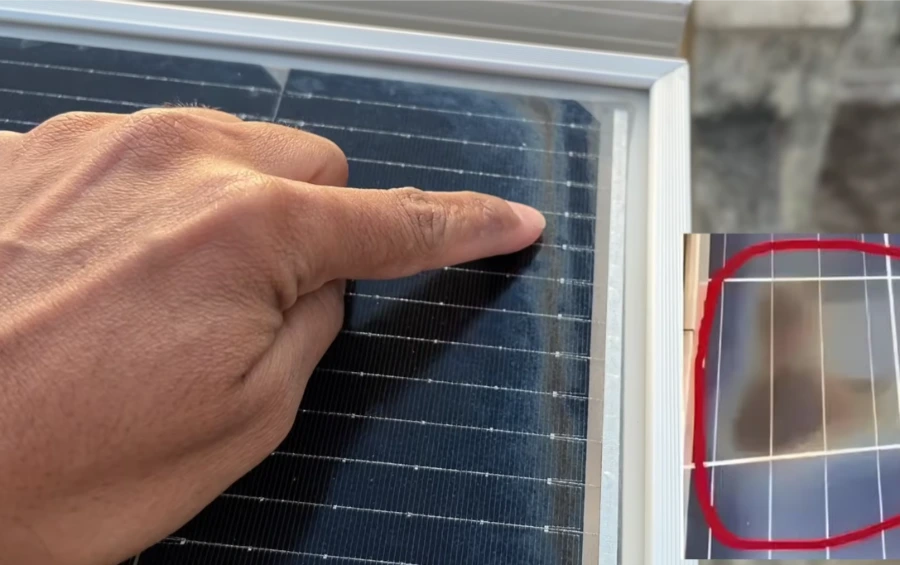
| Brown or yellow discoloration | Browned areas over the cells | One of the most common problems in hot, sunny climates and a sign of lost output |
| Snail trails | Thin dark lines across the cells | Often a sign of tiny cracks in the cells underneath |
| Burn marks and hot spots | Brown or black scorch marks on the front or back | Can be a fire risk. If you see one, call a licensed electrician before anything else. |
| Backsheet damage | Cracking or peeling on the back of the panel | Exposes the wiring layers to the weather |
| Delamination | Bubbles or cloudy layers inside the panel | Lets moisture in and lowers output |
| Loose or chewed wiring | Wires hanging under the array, chewed insulation, nests on cables | Birds and rodents nest right next to live wiring |
| Racking and mounts | Loose clamps, missing bolts, rust | A loose panel can shift in a windstorm |
| Soiling level | Dust film, mud streaks, droppings | Tells us honestly whether a cleaning is worth it |
In a 13-year look at a Southwest US array, discoloration made up 62% of the problems found and backsheet defects 29%, according to a NIST workshop paper. That is why we look at the back of the panels and not just the glass.
What is in your photo report
- Overview photos of each roof face and array
- Close-ups of every issue we find, with where it is on the array
- How dirty the panels are, and whether we think a cleaning is worth it
- Bird activity: nests, droppings and gaps where pigeons can get under
- Our plain-English recommendation: clean, add mesh, call your installer, or leave it alone
- If you share your monitoring app numbers, a note on how this year compares with last year
Every solar panel cleaning we do starts with this same check, so you get a report either way. Commercial sites get one report per address. See commercial solar cleaning.
Selling or buying a Las Vegas home with solar
Buyers ask about solar panels more than almost anything else on the roof. A dated photo report answers the questions before they come up: how many panels, what condition they are in, whether pigeons have gotten under them, and whether anything needs a contractor.
If the system is leased or on a power purchase agreement, the buyer usually has to qualify with the solar company to take it over, so pull the contract early. If the system is owned, the panel maker’s warranty usually transfers with the house. Check the paperwork either way.
What we do not do
We do not open panels, test inverters or do electrical repairs. If we find damage, we photograph it and tell you to call your installer or a licensed contractor. You can check any contractor’s license with the Nevada State Contractors Board before you hire them. For what brown marks or loose wires on a panel can mean, see our solar panel FAQ.
Solar panel inspection Las Vegas FAQs
What does a solar panel inspection include?
A close visual check of every panel, the racking and mounts, the wiring you can see, and anything nesting under the array, with a photo report and a plain-English recommendation. It does not include opening panels or electrical testing.
Should I get my solar panels inspected before selling my house?
It helps. A dated photo report shows buyers the condition of the panels, any pigeon activity and anything that needs a contractor, before those questions come up during escrow.
How do I know if my solar panels are damaged?
Look for cracked glass, brown or yellow areas over the cells, scorch marks, bubbles inside the panel and wires hanging under the array. A drop in output on clear days with no new shade is another sign.
How much output should my solar panels lose each year?
An NREL review of nearly 2,000 measured systems found a median loss of about 0.5% a year. A much bigger drop than that is worth an inspection.
Can you repair damaged solar panels?
No. We document damage and tell you who to call: your installer, the panel maker for warranty claims, or a licensed contractor you can check with the Nevada State Contractors Board.
Book a solar inspection
Tell us your address or ZIP code, roughly how many panels, and why you want the inspection: a sale, a storm, an output drop or birds. We will reply with a price and the first open date.
Sources: NREL degradation rates review, IEA PVPS review of PV module failures, Wohlgemuth, Trends in Field Failure Modes (NIST workshop), Nevada State Contractors Board. Updated October 2026.